

Exposure of Impacted Teeth
If a permanent tooth is unable to erupt normally, it may require a minor oral surgery procedure to expose the tooth and help guide it into its proper position. At Summit Oral & Maxillofacial Surgery, our surgeons work closely with your orthodontist to expose impacted teeth and improve the chances of achieving a healthy, functional smile.
What Is an Impacted Tooth?
An impacted tooth is a tooth that becomes trapped beneath the gums or within the jawbone and cannot erupt into its normal position. While impacted wisdom teeth are the most common, the upper canine teeth (also called cuspids or eyeteeth) are the second most frequently impacted teeth.
Unlike wisdom teeth, canine teeth play an essential role in your bite. They help guide your teeth into proper alignment, support your facial appearance, and have the longest roots of any teeth in the mouth. Because of their importance, every effort is made to help impacted canines erupt rather than removing them.
Permanent upper canines typically erupt around age 11 to 13. When they fail to erupt, they may remain positioned:
- On the roof of the mouth (palatal side)
- Within the jawbone above neighboring tooth roots
- Toward the lip or facial side of the dental arch
Approximately 60% of impacted canines are located on the palate, while the remaining cases occur within the bone or toward the facial side of the jaw.
Why Early Diagnosis Matters
Early diagnosis greatly increases the likelihood that an impacted canine can be successfully guided into its proper position. As patients get older, impacted teeth become less responsive to natural eruption and orthodontic treatment.
A comprehensive examination, panoramic X-rays, and sometimes 3D CBCT imaging allow your oral surgeon and orthodontist to determine:
- Whether all permanent teeth are present
- The exact position of the impacted tooth
- Whether baby teeth or extra teeth are blocking eruption
- The most appropriate treatment plan
In some cases, baby teeth, extra (supernumerary) teeth, or other obstructions must be removed before the impacted tooth can be successfully guided into place.
Success Rates Based on Age
The earlier treatment begins, the better the outcome tends to be.
- Ages 11–12: Excellent chance of successful eruption once adequate space has been created.
- Ages 13–14: The impacted canine is unlikely to erupt on its own, even after space has been opened, and surgical exposure is usually recommended.
- Over age 40: There is a much greater chance the tooth has fused to the surrounding bone (ankylosis). In these cases, extraction followed by replacement with a dental implant or bridge is often the best option.
How Are Impacted Canine Teeth Treated?
If the tooth does not erupt naturally after orthodontic treatment has created enough space, your orthodontist and oral surgeon will work together to guide it into position.
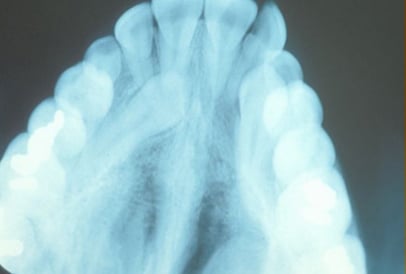
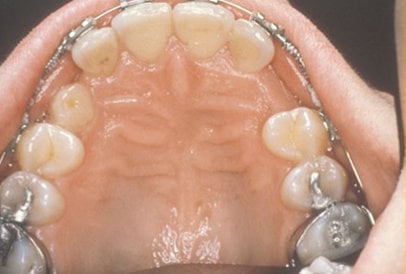
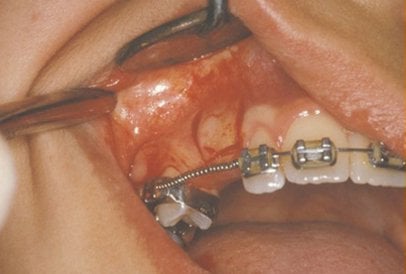
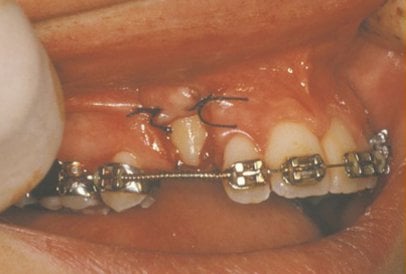
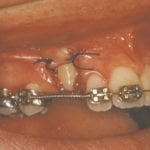
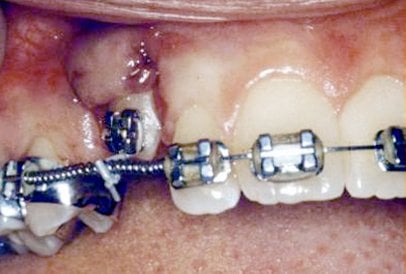
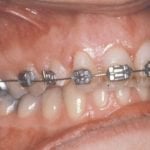
During a surgical exposure procedure, the oral surgeon carefully uncovers the impacted tooth. In many cases, a small orthodontic bracket and chain are bonded to the tooth so your orthodontist can gradually move it into the proper position over time.
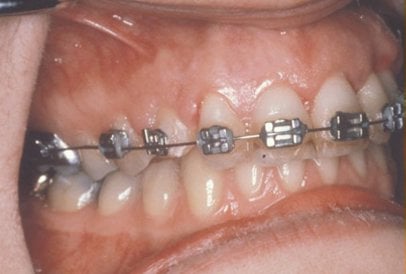
Whenever possible, preserving and positioning the natural tooth is preferred over extraction. After orthodontic treatment is complete, your surgeon will evaluate the surrounding gum tissue to determine whether any minor gum contouring is necessary for the healthiest long-term result.
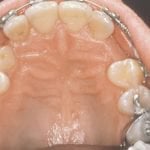
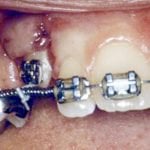
Exposure and Bracketing of an Impacted Cuspid
What to Expect During Exposure & Bracketing Surgery
Exposure and bonding of an impacted tooth is a routine outpatient procedure performed in our office. Most patients are comfortable with local anesthesia and nitrous oxide (laughing gas). For patients who prefer additional comfort, IV sedation may also be available.
If the procedure only requires exposing the tooth without placing an orthodontic bracket, the surgery is generally shorter and recovery is often quicker.
Before your procedure, your surgeon will review:
- Your imaging and treatment plan
- Anesthesia options
- Recovery expectations
- Postoperative care instructions
Most patients experience only mild discomfort and swelling for a few days and are able to return to normal activities shortly afterward.
Please review our Preoperative Instructions before your appointment. If you have questions about exposure of impacted teeth or your upcoming surgery, please contact Summit Oral & Maxillofacial Surgery.